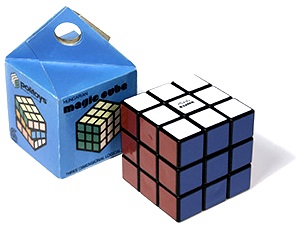
 Some people own fourteen versions of the same 3x3 Rubik's Cube. Ask them why and they'll have a real answer: different plastic, different sticker set, different year. One was bought at a 1982 department store in Ohio. One came from a Hungarian factory batch that used slightly softer corner caps. The details matter to them the way car people notice engine sounds that everyone else ignores. It's not random. It's just a very specific kind of attention.
This isn't purely a puzzle thing. Collectors in every category end up in the same place eventually: a room full of stuff that only makes sense to other people who collect the same stuff, and a running list of gaps that need filling. Stamp collectors, vintage sneaker hunters, antique tool people. What's interesting is that this exact mindset has moved almost perfectly intact into digital spaces, into games where the objects have no physical existence but the psychology of hunting and owning them is identical.
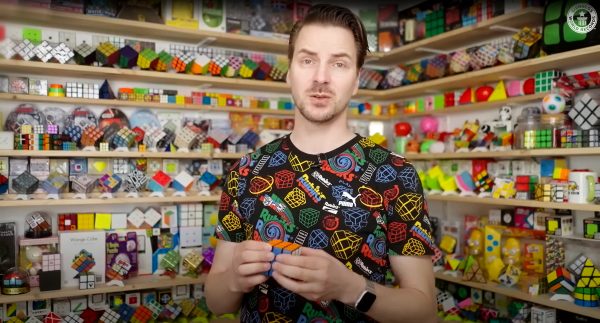
Not everyone who owns a Rubik's Cube wants to solve it
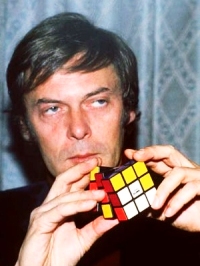
The Rubik's Cube was invented in 1974 by Erno Rubik, a Hungarian architecture professor who built it to help explain three-dimensional rotation to students. He didn't realize immediately that he'd made something unsolvable, at least not to him. It took him about a month to figure out his own puzzle. When the cube hit Western toy stores in the early 1980s, it sold somewhere between 350 and 400 million units. No other puzzle has come close.

A significant portion of those buyers never solved it. Some tried for a week and gave up. Some peeled the stickers. A lot of them just put it on a shelf and moved on. That's fine, and it's also where collecting starts for a lot of people: you own one, you see a different version somewhere, you get curious, you buy it. Before long you're reading about factory variations in original 1981 Ideal Toy Corporation production runs and wondering if the cube you found at a garage sale is a first edition.
Vintage cubes in good condition with original boxes sell for real money. A pristine early-production 3x3 with intact stickers and original packaging can fetch several hundred dollars from the right buyer. The cube itself is functionally identical to one you can buy today for ten dollars. What people are paying for is the object's history, its age, its specific place in the timeline of the thing they care about.
| 1974 |
The invention of the cube
|
| 1975 |
Patent obtained
|
| 1977 |
Test batches released in Hungary
|
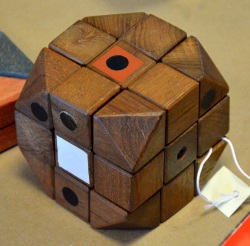
 In 1975 Rubik received a patent for his “Magic Cube” in Hungary.
 The puzzle world is much bigger than one cube
The 3x3 is the entry point. The community behind it is enormous and goes in directions most people outside it don't know about. There are puzzles shaped like dodecahedra, puzzles built entirely around gear mechanisms, puzzles with so many pieces that only a handful of people worldwide can solve them reliably. Some collectors own puzzles they have no intention of ever solving. The point is the object:
- the mechanism,
- the design,
- sometimes just the fact that one was made at all.
Convention-exclusive releases and short production runs have created genuine scarcity in parts of the market. A puzzle sold only at a specific event, or a designer edition from someone who's since stopped making puzzles, carries a premium that has nothing to do with difficulty. It's the same logic that drives any collectibles market. Limited supply and the FOMO that comes with it plus people who care equals inflated secondary market prices.
Digital collecting runs on the same logic
Games have understood collection mechanics since at least the early Pokemon era, but the formula has gotten more sophisticated. Modern games build entire economies around it: items with tiered rarity, limited-time availability, secondary trading markets, price tracking by players who treat it like a stock exchange. The objects have no physical form but the behavior around them is hard to distinguish from what happens in any serious collectibles hobby.
Roblox games are a clear example of how far this goes. Players spend real money, track values, and debate rarity tiers with genuine seriousness. The pet simulator 99 shop works on exactly this model: pets come in different rarities, some were only available during specific events and can't be obtained anymore, and the market value of a rare pet is determined by the same supply-and-demand logic that prices a vintage puzzle convention exclusive. The comparison isn't a stretch. It's the same system running on different hardware.
Speedcubers are a completely different crowd
None of this applies to competitive speedcubers, who have no patience for any of it. To a speedcuber, a cube is a tool. If a newer model turns faster or locks up less, the old one goes in a drawer or gets sold. A ten-year-old cube isn't interesting, it's obsolete. The world record for a 3x3 solve currently sits under 3.5 seconds. The people chasing those times think about finger tricks, algorithm sets, and lubrication viscosity. Collecting has nothing to do with it.
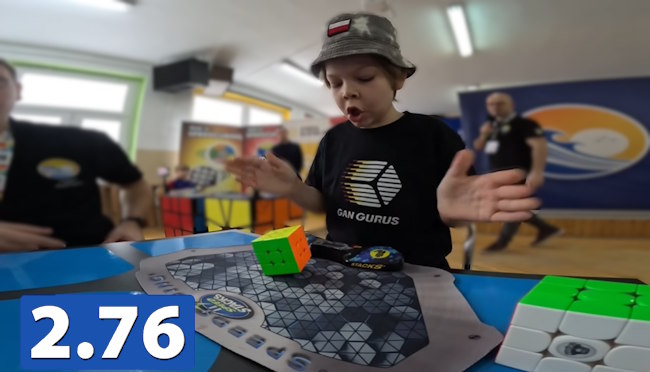
Teodor Zajder solving the Rubik's Cube in 2.76 seconds
The two groups share a hobby in the loosest sense and mostly leave each other alone. A collector at a puzzle event and a speedcuber at the same event are there for completely different reasons. The collector wants to find something they don't have. The speedcuber wants to go faster. The cube is the same object and the communities have almost no overlap in what they actually care about.
How the hobby got as big as it is
YouTube did a lot of the work. Tutorial videos made solving accessible to anyone willing to spend an afternoon learning a beginner method. Before that, most people who couldn't solve a cube just gave up and assumed it was beyond them. Once a clear step-by-step method was a search away, the barrier dropped. A lot of people who discovered speedcubing through YouTube would never have found it otherwise.


Online marketplaces changed the collector side in similar ways. Rare and vintage puzzles that would have required knowing the right people or attending specific events can now be found by anyone with a search bar. The market is global. Sellers and buyers who would never have crossed paths are transacting regularly. Values have gone up partly because of this, but access has also improved, which is a reasonable tradeoff.
The puzzle community is bigger now than it has ever been, and it keeps pulling in people from different directions: someone who picked up a cube on a whim and got hooked, someone who watched a speedcubing video and couldn't believe what they were seeing, someone who found an old cube at an estate sale and ended up spending three hours researching what they had. The entry points are different. The result is usually the same.