If you have ever tried learning the solution of a new puzzle online, you have probably noticed something interesting. The best tutorials rarely rely on walls of text. Instead, they combine short explanations with clear visuals, arrows, algorithm animations, symbols, and simple icons that guide you through each move. More like an infographics.
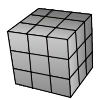
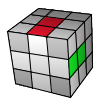
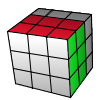
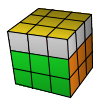
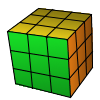
That is not just a design trend. It is how our brains naturally process information. Whether you are solving your first Rubik's Cube, tackling a Megaminx, or learning a completely different twisty puzzle, good visual communication can make the difference between understanding a solution in minutes or giving up halfway through. Of course, algorithms and notation are important. However, the way they are presented matters just as much. Let's take a closer look at why simple icons make puzzle tutorials so much easier to follow.
Your Brain Understands Pictures Faster Than Words
 Suppose you are given two puzzle guides. The first one contains paragraphs of extended prose with a detailed explanation of every move. The second employs a few already known icons. These can be rotation markers, highlighted cube faces, hand symbols, special person icon elements, warning markers, and progress indicators. The second guide will be easier to follow by most people.
The brain🧠 processes visual information very quickly. You don't have to read and interpret each sentence, you can just pick out a symbol in no time. The curved arrow↪ can immediately imply rotation. Highlighted face will indicate where to focus. There is a small icon depicting a person's hand, which reminds you of which side of the puzzle to pick up. 👉❒
These little visual aids help to lessen the brain work involved in comprehending what's going on.
Icons Create a Universal Language
One of the greatest issues with puzzle tutorials is that people around the globe use them. Not all people speak the English language. It is not always feasible to translate, say, detailed instructions into dozens of languages. Luckily, there are few visual symbols that don't need to be translated. The clockwise ↻ arrow, whether in Japan, Brazil, Italy, or Canada, has the same meaning.
R U R' U R U2 R' U
No matter what language, a highlighted corner piece is sure to attract attention. That's one of the reasons why over the years, puzzle communities have developed standard visual conventions (notation). With a bit of knowledge of a few common symbols, you can navigate from one tutorial to another without having to start from scratch each time.
They Reduce Information Overload
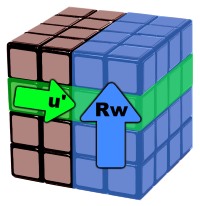 Learning a puzzle already involves remembering new notation, recognizing patterns, and planning future moves. Adding lengthy explanations to every single step only increases the cognitive load. Simple icons help break information into manageable pieces.
You do not need the following to be written in a tutorial: "Rotate the front face clockwise while keeping the white layer facing upward before moving the right layer." Instead, you might simply show:
- a highlighted front face
- a clockwise arrow
- an icon indicating the top face stays in position
The instruction becomes much easier to absorb because your eyes can understand the sequence almost immediately. This keeps learners focused on solving instead of decoding instructions.
Step-by-Step Learning Feels More Natural
Great puzzle tutorials do not overwhelm beginners with everything at once. They guide you through one action at a time. Icons support this perfectly because they naturally separate information into small visual chunks.
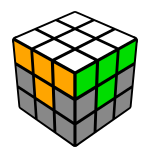
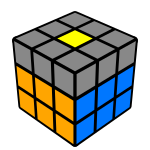
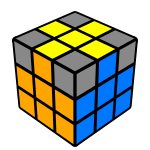
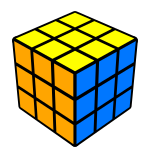
Rather than presenting an entire algorithm as one intimidating block, a tutorial can introduce each movement with a simple illustration or symbol before moving to the next step. This gradual approach builds confidence. Each completed move feels like progress instead of another confusing instruction.
Visual Consistency Builds Confidence
One overlooked benefit of simple icons is consistency. Imagine if every tutorial used different symbols for the exact same move. Learning would become much harder in this case because you would constantly have to relearn the visual language before you could even start solving the puzzle.
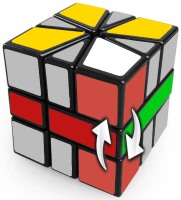
A Square-1 solution algorithm: (0, -4) / (0, 3) / (0, 1)
Fortunately, many high-quality puzzle resources use consistent icon systems. The same rotation arrows appear throughout the guide. The same colors represent the same cube faces. The same visual cues highlight important pieces. Once you become familiar with these patterns, navigating new tutorials becomes much easier because the interface itself feels predictable. Consistency allows you to focus on the puzzle.
Icons Keep the Focus on the Puzzle
Long explanations often draw your attention away from the puzzle sitting in your hands. You read a paragraph. Reflect on the cube. Read another sentence. Attempt to recall what you just read. Look back again. Simple icons minimize this "flipping around". A glance may be enough to know what the next step in solving the puzzle is before moving back to the puzzle and attempting it. This makes learning so much easier. The tutorial turns into a guide rather than a hindrance to solving.
The Best Tutorials Feel Effortless
If the tutorial is well done, you don't notice the icons at all. They subtly catch your eye. They clarify each step. They repeat the meaning of the words without interfering with it. The job of good visual communication is just that.
If you're a puzzle enthusiast, the first step in solving an algorithm is to know what's next. Tutorial makers (wheather written or video) can make that next step easier to see, easier to remember, and easier to repeat by pairing explanatory text with consistent, clear icons. Simple icons make complex instructions seem approachable. They eliminate confusion, aid in visual learning, and decrease the time it takes to decipher directions.