I have spent years around Rubik's Cubes, twisty puzzles, algorithms, and speedcubing. That kind of thinking changes how you look at games. You start noticing patterns, routes, timing, and small optimizations everywhere. When I tried paintball, I expected a simple physical outdoor game. What surprised me was how much of it felt like a moving puzzle. I enjoyed it enough that I actually bought my own paintball gear, and that made me look at the game from a cuber's perspective.
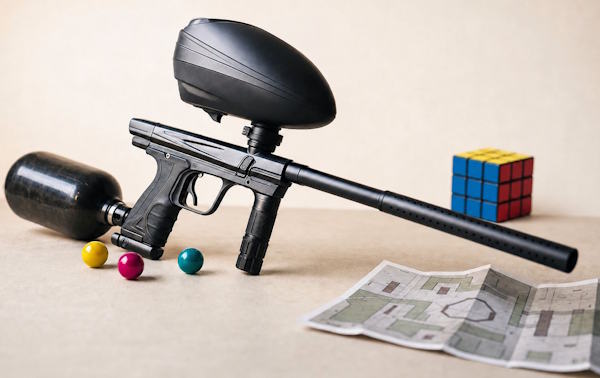
At first glance, a Rubik's Cube and a paintball field seem unrelated but once you start playing, the similarities become clear. Both reward planning ahead, reading patterns, correcting mistakes quickly, and staying calm when the clock is against you. Paintball is not only about running, aiming, or hiding behind bunkers. A good match is full of decisions: where to move, when to wait, which angle to cover, and how to predict what the opponent will do next -- lookahead with cubing terms.
That is why paintball can appeal to people who already enjoy puzzles, chess, strategy games, and competitive gaming. The field becomes a live puzzle to solve. Every bunker changes the geometry of the game. Every opponent creates a new threat. Every move gives you information, but also exposes you to risk. Even when players upgrade from rental kits to more precise paintball guns, the most important advantage still comes from reading the field well and making better decisions under pressure.
Lookahead: the speedcubing skill that transfers best
In speedcubing, lookahead means solving one part of the cube while already searching for the next useful pieces. A good cuber does not finish one step, stop, and then begin thinking about the next step. The goal is to keep the solution flowing. While finishing the cross, you are already watching the first F2L pair. While inserting one pair, you are already tracking the next one.
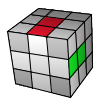
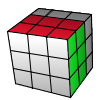
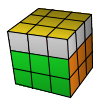
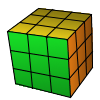
Paintball uses a similar kind of thinking. When you move to one bunker, you should already be thinking about the next safe position, the lane you are opening, the angle you are giving up, and where your teammates are. A beginner thinks only about the current hiding place. A better player thinks two or three moves ahead. That feels familiar to anyone who has practiced lookahead on the cube.
The difference is that on a cube you can see the whole puzzle and every move has a predictable result. Paintball is messier. Opponents move, teammates make mistakes, and you never know everything for sure. That uncertainty makes the game harder, but also more interesting.
Pattern recognition under pressure
Cube solvers learn to recognize cases quickly. A familiar F2L setup, OLL shape, or PLL case saves time because the brain does not need to solve everything from zero. You see the pattern, choose the right response, and execute it.
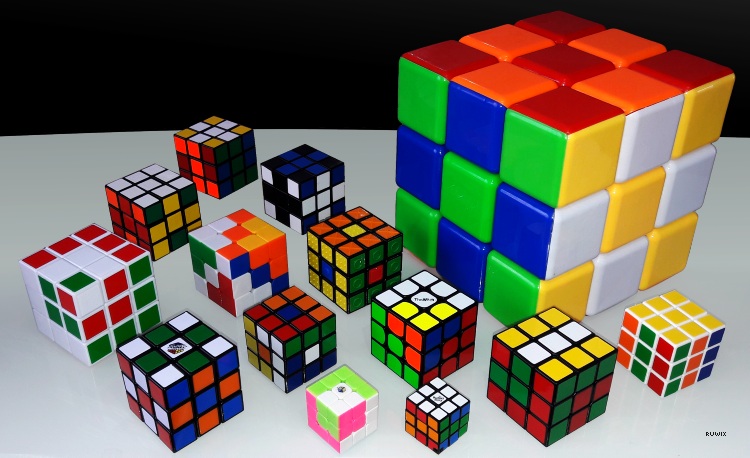
The same habit helps in tactical games. After a few paintball matches, recurring situations start to appear. You notice when a flank is weak. You recognize when an opponent is pinned down. You learn when a lane is dangerous, when a push is possible, and when moving would only make you an easy target. The better you become at reading these patterns, the less random the game feels.
This is close to how cubers think about algorithms and positions. A beginner sees a scrambled cube as chaos while an experienced solver sees structure. The same thing happens on a paintball field: a beginner sees noise, movement, and flying paint. A more strategic player sees routes, pressure, cover, timing, and weaknesses.
Spatial reasoning: from cube rotations to field geometry
Solving twisty puzzles develops spatial reasoning. You learn to imagine how pieces move, how layers affect each other, and how a temporary disruption can lead to a better final position. That kind of mental mapping is useful far beyond the cube.

Official competition puzzles
In paintball, spatial reasoning appears in a different form. You need to understand angles. A bunker that protects you from one side may expose you from another. A short move forward may improve your shooting angle but remove your escape route. A teammate's position can make your own position stronger or weaker. The field is not static, but you still need to build a mental map of it.
This is one reason puzzle solvers may find paintball more interesting than expected. The challenge is not only physical. It is geometric.
You are constantly asking:
- Who can see me? What can I see?
- Which lane is closed? Which route is safe?
- What changes if I move five meters to the left?
Error correction matters as much as planning
No cuber solves perfectly every time. You miss a pair, rotate badly, choose a slow algorithm, or lose track of pieces. The important skill is not avoiding every mistake. It is noticing the mistake quickly and recovering without panic.
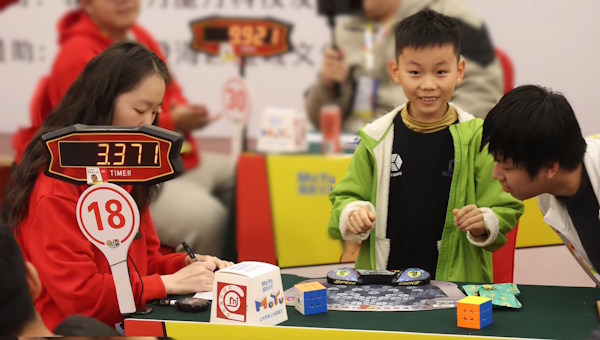
Paintball has the same rhythm. You may move too early, choose the wrong bunker, expose yourself, or misread where an opponent is hiding. If you freeze after that mistake, the game usually gets worse. If you correct quickly, you may still recover the position.
This makes paintball feel closer to speedcubing than it first appears. Both reward fast feedback loops. You act, read the result, adjust, and continue. A player who can calmly update their plan has a major advantage over someone who simply reacts emotionally to every surprise.
Why gamers and puzzle solvers often enjoy paintball
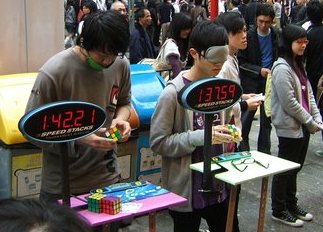 Competitive gamers are already used to managing several variables at once: positioning, timing, resources, cooldowns, opponents, teammates, and risk.
Puzzle solvers manage a different set of variables: pieces, orientation, algorithms, recognition, and execution.
Paintball combines parts of both worlds.
During a match, you may need to track ammunition, teammate positions, likely opponent locations, open lanes, the remaining time, and your next move. The mental load can be high, especially when the match becomes fast. That is exactly the kind of situation where strategic players often enjoy themselves. They are not only trying to shoot better. They are trying to think better.
In some formats, advanced equipment can increase the pace of the game. For example, fully automatic guns can make timing, positioning, and decision-making even more important because hesitation becomes more costly. But equipment does not remove the strategic layer. If anything, faster play makes weak decisions more visible.
Equipment helps, but thinking still decides a lot

A pro speedcube
There is always a temptation in any hobby to believe that better gear will solve everything. Cubers know this very well. A smoother speedcube helps, but it does not replace lookahead, finger tricks, efficient F2L, or good algorithms. The same logic applies to paintball. Better gear can make the game more consistent and enjoyable, but it does not replace awareness, positioning, and timing.
That was one of the interesting lessons for me after trying paintball and then buying my own setup. The equipment made the experience better, but it did not make the tactical part disappear. I still had to read the field, choose better positions, communicate, and avoid obvious mistakes. In that sense, paintball keeps the same appeal as a good puzzle: tools matter, but understanding matters more.
A live puzzle with opponents
A Rubik's Cube is a closed system. It waits for you. It does not try to trick you. Paintball is different because the "puzzle" fights back. Other players adapt to your choices. A route that worked once may fail the next time. That is what makes the game appealing to many strategic minds. Paintball takes familiar puzzle-solving habits and puts them into a live, unpredictable environment. You still use lookahead, pattern recognition, spatial reasoning, and error correction, but now those skills are tested against other people in real time.
For cubers, gamers, and puzzle solvers, that can be a natural next challenge. Paintball is not a replacement for puzzles, and it is obviously more physical than solving a cube at a desk.
But the mental appeal is similar: understand the system, find the best move, adapt when the situation changes, and try to stay one step ahead.